

































Effective Strategies for Controlling Psyllids: Natural Methods for a Healthy Garden
Psyllids (also known as "jumping plant lice") are small, agile pests that primarily feed on young shoots and the undersides of leaves. Fruit trees (e.g., pears), ornamental plants, and various garden plants are frequently affected. Feeding can cause leaves to curl, weaken shoot growth, and lead to sticky honeydew – a typical warning signal you should take seriously.
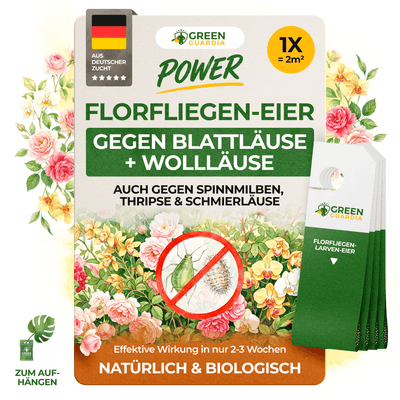
If you want to naturally control psyllids, a multi-step approach is ideal: detect early, reduce mechanically, and then provide support with beneficial insects. The use of lacewing larvae & eggs (for scattering) has proven particularly effective, or – as a convenient solution for multiple plants – lacewing larvae & eggs (for hanging). Additionally, an aphid repellent spray can be useful for plant care if you want to take action immediately at the first signs.
🐞 Tip: Psyllids are small and fast. Regularly check shoot tips and leaf undersides – especially in the spring when plants are producing fresh growth.
Causes: Where do psyllids come from?
Psyllids usually increase when conditions are "perfect" for them: mild temperatures, fresh growth, and a garden lacking natural predators. Many species overwinter as adults in bark crevices, hedges, or dense foliage and migrate to host plants in the spring. Eggs are then laid there – the larvae feed on young plant parts and increase the damage.
Typical risk factors in the garden
- Abundant fresh growth (e.g., after heavy pruning or fertilization)
- Sheltered, warm locations (hedges, house walls, greenhouse)
- Few beneficial insects due to a lack of flowering plants and retreats
- Monoculture / uniform planting in the garden
Identification: How to spot psyllids on plants
You will usually identify psyllids first by the damage – the insects themselves jump away quickly. Pay close attention to young shoots, leaf buds, and the undersides of new leaves.
- Curled or deformed leaves, often on young shoots
- Sticky honeydew on leaves (often shiny and sticky)
- Sooty mold (black coating) on areas covered in honeydew
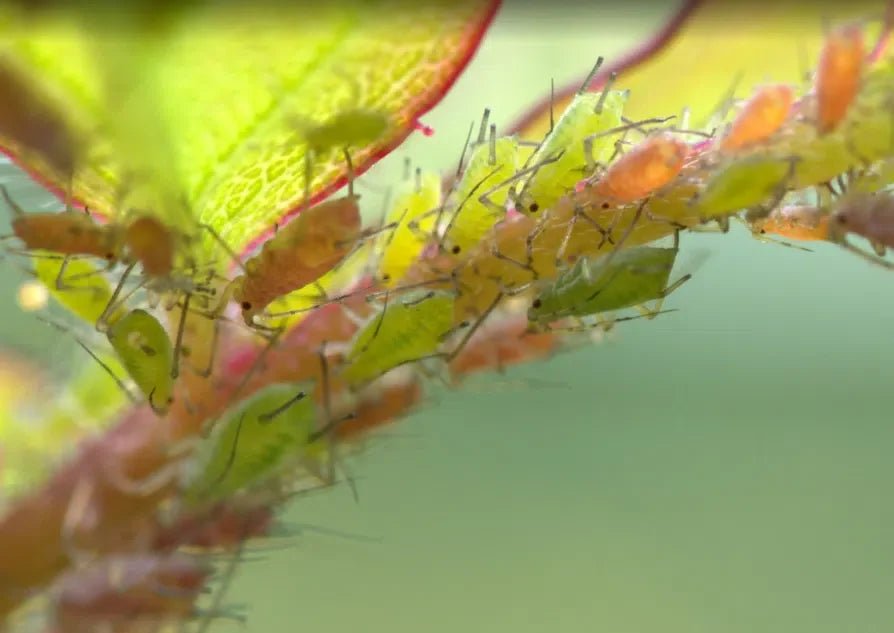
- Small, flat larvae/nymphs on leaf undersides (often difficult to see)
- Small jumping insects when the plant is touched
Control: Natural methods that actually work
To sustainably reduce psyllids, a phased approach is effective: mechanical relief, targeted support, and then stabilization. This reduces infestation pressure without upsetting the garden's ecosystem.
1) Immediate measures for an infestation
- Check shoots and prune heavily infested tips (do so carefully, don't overdo it)
- Rinse with water: Gently wash down leaf undersides and young shoots
- Clean sticky leaves so that honeydew does not encourage sooty mold
- Regular inspection every 2–3 days until the pressure decreases
2) Introduce beneficial insects: Lacewing larvae as natural predators
Lacewing larvae are among the most effective "hunters" in a natural garden. They not only help with common sap-sucking pests like aphids but generally assist when small pests multiply on young plant parts. Depending on the location, these variants are particularly practical: lacewing larvae & eggs (for scattering) or lacewing larvae & eggs (for hanging).
- Ideal for the garden, raised beds, balcony plants & greenhouses
- Particularly useful for recurring infestations and areas with many plants
- Supports natural balance – rather than just suppressing "symptoms" in the short term
3) Complementary plant care: Combining with an effective repellent spray
If you would like to integrate an additional simple plant care measure, an aphid repellent spray can be a sensible addition – especially if you want to react quickly at the first signs. Combined with lacewing larvae, it creates a natural approach that supports plants and can reduce infestation pressure.
✅ Note: With psyllids, consistency counts: monitor regularly, react early, and support beneficial insects. This is how you reduce pressure long-term – without "blasting" your garden clean.
Prevention: Keeping psyllids away long-term
Prevention is the key to a healthy garden. The goal is to strengthen plants so that psyllids cannot establish themselves in mass numbers – while simultaneously promoting beneficial insects to create natural predator pressure.
- Balanced fertilization: too much nitrogen creates soft shoots – particularly attractive to sap-suckers
- Targeted pruning: not too late, not too radical – strong new growth is more susceptible
- Plant flowers for beneficial insects (nectar & pollen as food)
- Create retreats: hedges, perennials, insect hotels, natural corners
- If pressure recurs, provide targeted support with lacewing larvae for hanging or lacewing larvae for scattering
Source reference: For generally accepted recommendations on natural garden care and promoting beneficial insects, information from the Federal Environment Agency (Umweltbundesamt) and reputable horticultural and consumer organizations is recommended.
FAQ about Psyllids
How can I confidently identify psyllids?
You can often identify psyllids by the damage: curled young leaves, sticky honeydew, and sometimes sooty mold. The insects themselves often jump away – therefore, check the leaf undersides and shoot tips very carefully.
What is the best way to control psyllids in the garden?
A mix is most effective: first reduce mechanically (rinse off, manage infested shoots), then promote beneficial insects. Particularly helpful are lacewing larvae & eggs or the practical version for hanging. Additionally, an aphid repellent spray can be useful as part of your plant care routine.
How long does it take for the infestation pressure to decrease?
This depends on the plant, the weather, and the severity of the infestation. In many cases, you will see significant relief within a few days to two weeks after consistent monitoring and support from beneficial insects. The crucial thing is to stay persistent and check regularly.
How can I prevent psyllids?
Strengthen your plants through balanced care, avoid extreme growth spurts caused by over-fertilization, and promote beneficial insects by planting flowers and providing retreats. If infestations recur, targeted support with lacewing larvae can help keep the garden stable in the long term.
Take action now:
Check your plants now, specifically looking at young shoots and leaf undersides. The earlier you detect psyllids, the easier it is to reduce the infestation pressure. Lacewing larvae & eggs (for scattering) or the practical version (for hanging) are suitable for natural support. If you are also looking for an uncomplicated plant care solution, the aphid repellent spray can be a useful addition. You can find more practical tips in our Green Guardia guide.