






































‘Opal’ plum tree – care, location, growth & frequently asked questions
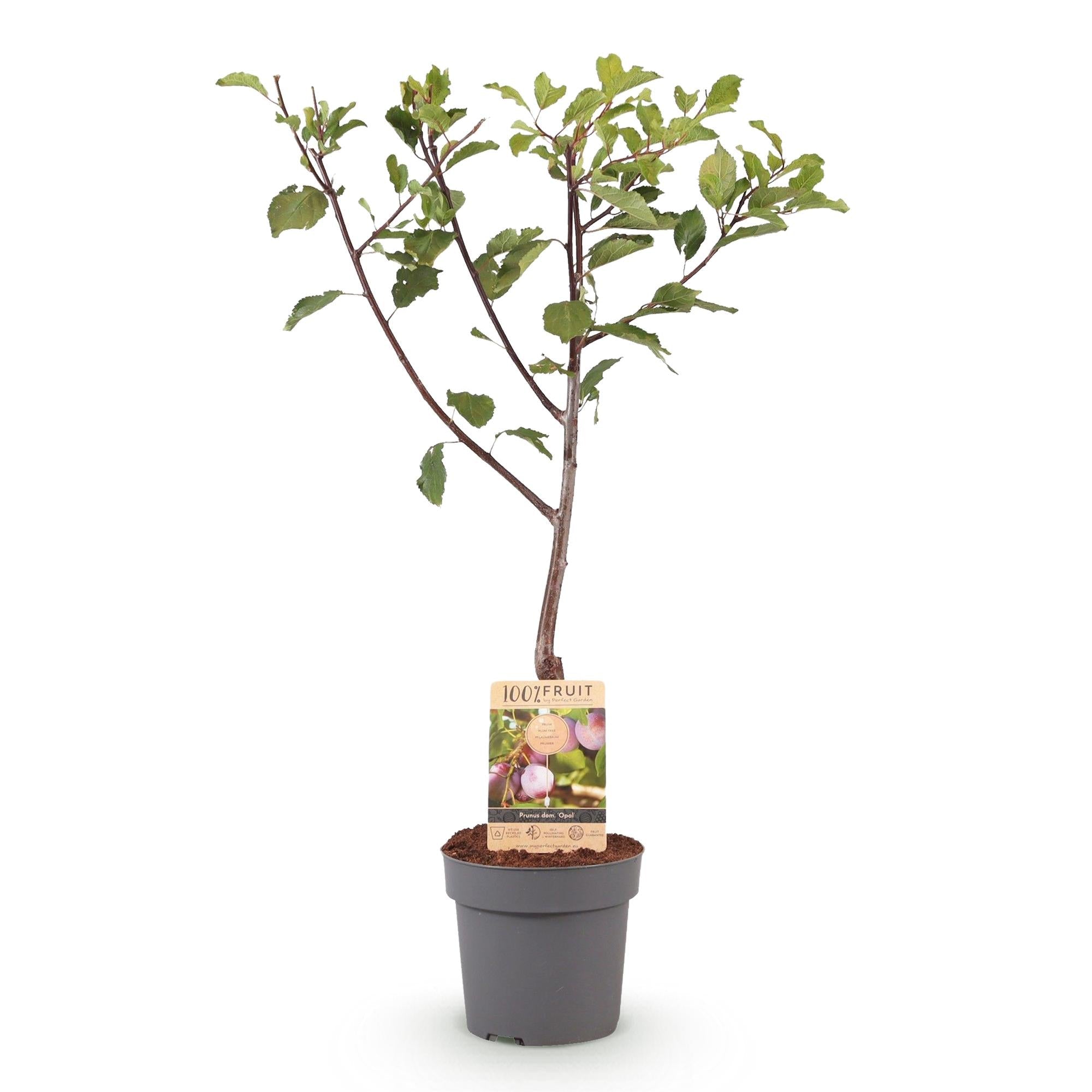
The ‘Opal’ plum tree (Prunus domestica) is a proven and particularly aromatic plum variety that is perfect for the home garden. Its attractive yellow-red fruits are impressive for their sweet taste and versatility – whether eaten fresh, made into jam, or used for baking.
With a robust young plant like the ‘Opal’ plum tree you create the ideal foundation for healthy growth and a reliably bountiful harvest in your own garden for years to come.
Origin & characteristics of the ‘Opal’ plum tree
Where does the Opal plum variety come from?
The ‘Opal’ variety is a popular European cultivated plum known for its robustness and high yields. It is ideally suited to Central European climate conditions and is prized for its reliable fruit production.
- Botanical name: Prunus domestica
- Yellow-red, aromatic fruits
- Self-fertile, though even more productive with a pollinator
- Hardy and easy to care for
The ‘Opal’ plum tree is particularly well-suited for beginners and will develop into a healthy fruit tree with the right care.
Appearance & growth of the ‘Opal’ plum tree
How does an Opal plum tree grow?
The plum tree forms a compact, well-branched crown with decorative white blossoms in the spring. These blossoms later develop into the characteristic sweet fruits.
- Growth height: several meters possible outdoors
- Blooming period: April to May
- Harvest time: July to August (early variety)
- Attractive blossoms and decorative appearance
‘Opal’ plum tree location – ideal conditions
What is the ideal location for the plum tree?
The plum tree prefers a sunny, sheltered location with well-draining, nutrient-rich soil. Sufficient sunlight promotes both blossom formation and fruit development.
- Sunny to partial shade location
- Nutrient-rich, loose soil
- Sheltered location is ideal
- Suitable for gardens or large planters
A high-quality plant such as the Prunus domestica ‘Opal’ will grow especially vigorously in optimal conditions.
Caring for the ‘Opal’ plum tree – watering, fertilizing & pruning
How often should the plum tree be watered?
Young plum trees in particular require consistent watering. The soil should remain slightly moist without becoming waterlogged.
When should the plum tree be pruned?
Regular pruning encourages growth in the crown, improves air circulation, and supports fruit production.
- Shaping pruning in late winter or summer
- Removal of dead or weak branches
- Promotion of a stable tree structure
Typical problems & solutions for the plum tree
Why is the plum tree not producing fruit?
Causes can include an unsuitable location, lack of sunlight, or missing pruning. Proper care and an optimal choice of location significantly improve fruit production.
Identifying yellow or weak leaves
Nutrient deficiencies or unfavorable soil conditions can affect the health of the plant. A balanced supply of nutrients supports growth.
Propagation of the plum tree
How is a plum tree propagated?
Plum trees are usually propagated through grafting to maintain the variety's characteristics. Purchasing a healthy young plant offers the best starting conditions.
Prevention & long-term care
- Sunny location for optimal fruit production
- Regular pruning to promote healthy development
- Balanced water supply
- Nutrient-rich soil for vigorous growth
FAQ about the ‘Opal’ plum tree
When does the Opal plum tree bear fruit?
The fruit usually ripens between July and August and can be harvested directly from the tree.
Is the Opal plum tree winter-hardy?
Yes, the plum tree is well-adapted to Central European winters and is very robust.
Can a plum tree be kept in a container?
Yes, with enough space and regular care, the plum tree will also grow well in a large planter.
Take action now:
The ‘Opal’ plum tree is an excellent choice for anyone who wants to harvest aromatic plums in their own garden. With a sunny location, regular pruning, and proper care, the tree will grow healthy and productive.
With a high-quality young plant like the ‘Opal’ plum tree you lay the perfect foundation for a long-term and successful fruit harvest.