
























































Caring for the 'Titania' blackcurrant – location, growth & yield
The 'Titania' blackcurrant is one of the most popular varieties for home gardens. It impresses with its high yield, intense aroma, and excellent resistance to common blackcurrant diseases.
For a quick and reliable start, robust young plants like the 'Titania' blackcurrant 2-piece set , which are already well-rooted, are ideal.
Origin & characteristics of the 'Titania' blackcurrant
Where does the 'Titania' variety come from?
'Titania' is a modern breed of the Ribes nigrum species, specifically developed for robustness, uniform growth, and high fruit quality. It is particularly well-suited for cultivation in Central European gardens.
Key features at a glance
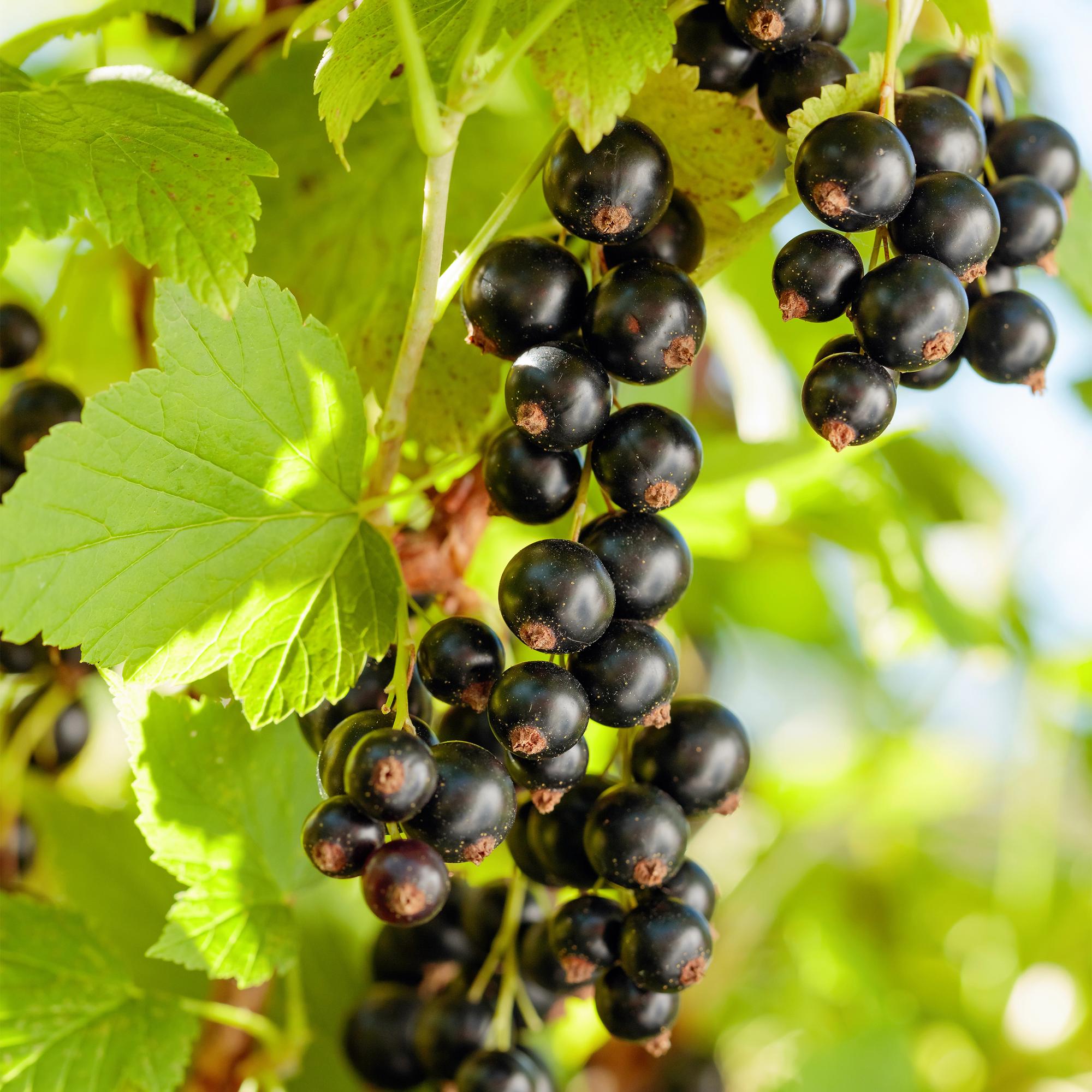
- Large, deep black berries
- Intensely aromatic, slightly tart flavor
- High resistance to leaf diseases
- Very productive with proper care
Appearance & growth of the blackcurrant
How does the 'Titania' currant grow?
The plant forms a strong, upright bush and reaches a height of about 150–180 cm. Young plants about 40 cm tall – like this 2-plant set – will develop quickly under good conditions.
Leaves, flowers & fruits
- Dark green, aromatically scented leaves
- Inconspicuous flowers in spring
- Large berries in dense clusters
The right location for blackcurrants
What is the ideal location?
The 'Titania' blackcurrant prefers a sunny to partially shaded location. Sufficient sun promotes aroma and yield, while light shade protects the plant from drying out.
- At least 5 hours of sunlight daily
- Nutrient-rich, humus-rich soil
- Good air circulation for healthy foliage
Care & watering the 'Titania' currant
How often should you water blackcurrants?
Consistently moist soil is crucial – especially during flowering and fruit development. However, waterlogging should be avoided.
- Water regularly during dry periods
- A layer of mulch keeps moisture in the soil
- Check container plants more frequently
Fertilization for vigorous growth
An application of compost or organic berry fertilizer in the spring supports nutrient supply and promotes fruit formation.
Common problems & solutions
Why does my blackcurrant produce few fruits?
- Location is too shady
- Irregular watering
- Lack of or incorrect pruning
A sunny spot and annual thinning pruning will significantly improve yield.
Propagation & long-term care
Propagation is straightforward using hardwood cuttings in autumn. For consistently healthy plants, older shoots should be removed regularly, as blackcurrants fruit primarily on young wood.
Plants that are already well-developed, such as the 'Titania' blackcurrant set , noticeably shorten the time until your first abundant harvest.
Frequently asked questions about the 'Titania' blackcurrant
When is harvest time?
Harvesting usually begins in July, as soon as the berries are completely black and slightly soft.
Is the variety hardy?
Yes, 'Titania' is very winter-hardy and is excellent for cultivation in Germany.
Is the plant suitable for a container?
With a sufficiently large pot, consistent watering, and nutrients, container cultivation is very feasible.
Take action now:
With the right location, balanced care, and regular pruning, the 'Titania' blackcurrant will remain vital and productive for many years. Robust young plants like the 2-plant set will help ensure a successful start in your garden or on your balcony.