










































Japanese Maple ‘Sumi-nagashi’ – Care, Location, Growth & FAQ
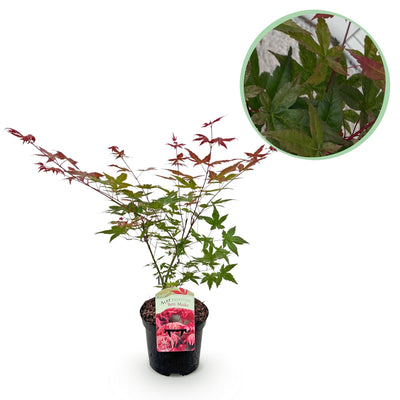
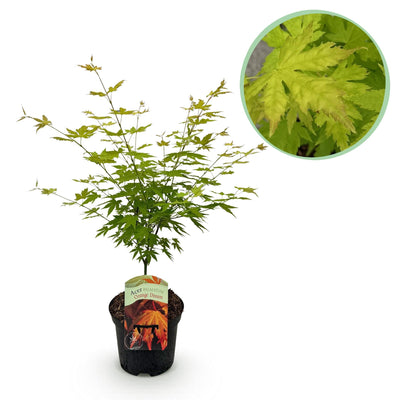
The Japanese Maple ‘Sumi-nagashi’ (Acer palmatum) is one of the most elegant ornamental shrubs for gardens, patios, and balconies. Its deep red, finely dissected leaves add a tranquil, Japanese-inspired atmosphere to any outdoor space. This variety is especially popular for its compact growth, intense foliage color, and low-maintenance nature.
With a healthy and vigorous plant like the Japanese Maple ‘Sumi-nagashi’ you create the ideal foundation for a long-lasting and decorative focal point.
Origin & Characteristics of the Japanese Maple
Where does the Acer palmatum ‘Sumi-nagashi’ originally come from?
The Japanese Maple is native to Japan, Korea, and China and has been an integral part of traditional gardens for centuries. There, it symbolizes peace, elegance, and natural harmony.
- Botanical name: Acer palmatum ‘Sumi-nagashi’
- Deciduous ornamental shrub or small tree
- Intense red leaf coloration
- Slow, controlled growth
- Ideal for gardens, pots, and balconies
A high-quality Japanese Maple ‘Sumi-nagashi’ develops a particularly harmonious growth habit with the right care.
Appearance & Growth of the ‘Sumi-nagashi’ Maple
How does the Japanese Maple grow?
This variety grows slowly and steadily, forming a loose, elegant crown. Its delicate leaves provide an intense splash of color throughout the entire growing season.
- Growth height: up to approx. 2–4 meters
- Slow growth
- Finely dissected, deep red leaves
- Particularly decorative in spring and autumn
Japanese Maple Location – Optimal Conditions
What is the ideal location for the Japanese Maple?
A semi-shaded to sunny location protected from strong winds offers optimal growing conditions. Well-drained soil is particularly important.
- Semi-shaded to sunny location
- Sheltered spot
- Humus-rich, loose soil
- No waterlogging
With the right location, the Japanese Maple ‘Sumi-nagashi’ can thrive and display its intense leaf color to the fullest.
Caring for the Japanese Maple – Watering, Soil & Maintenance
How often should you water the Japanese Maple?
The soil should be kept consistently moist without causing waterlogging. The plant requires regular watering, especially in summer.
- Water regularly but moderately
- Avoid waterlogging
- Use humus-rich, well-draining soil
- Mulch protects against drying out
Does the Japanese Maple need to be pruned?
Regular pruning is not necessary. Simply remove damaged or dead branches to maintain the plant's health.
Typical Problems & Solutions for the Japanese Maple
Why does the Japanese Maple get brown leaves?
Brown leaves are often caused by drought stress, intense midday sun, or unfavorable location conditions. A sheltered location helps to stabilize the plant.
Why does the Japanese Maple grow slowly?
Slow growth is normal for this plant. With an optimal location and healthy care, it will continue to develop steadily.
Propagation of the Japanese Maple
How can Acer palmatum be propagated?
Propagation is usually done via grafting or cuttings. For the best results, using healthy young plants is recommended.
Prevention & Long-term Care
- Choose a semi-shaded location
- Avoid waterlogging
- Water regularly
- Use humus-rich soil
- Prefer a wind-protected spot
FAQ about the Japanese Maple ‘Sumi-nagashi’
Is the Japanese Maple hardy?
Yes, Acer palmatum is hardy and well-suited to Central European climatic conditions.
Can the Japanese Maple be kept in a pot?
Yes, the plant is very well-suited for pots and balconies, as long as the location is suitable.
How fast does the Japanese Maple grow?
The Japanese Maple grows slowly and develops a harmonious and decorative shape over time.
Take action now:
The Japanese Maple ‘Sumi-nagashi’ is an excellent choice for stylish gardens and balconies. With the right care, a suitable location, and consistent water supply, it develops into a long-lasting and decorative plant.
With a healthy Japanese Maple ‘Sumi-nagashi’ you create a long-term and stylish enhancement for your garden or balcony.


